
The 9th Asia Euro Conference 2026 “Redefining Impact: Advancing Sustainable Innovation for the Future”
- Jun 8
- 3 min read
The 9th Asia Euro 2026 Conference on Tourism, Hospitality, and Gastronomy, themed “Redefining Impact: Advancing Sustainable Innovation for the Future,” was held from 10–12 May 2026 at Villa College, Malé, Maldives. The conference was jointly organised by Taylor’s University, Malaysia, and Université Toulouse – Jean Jaurès, France, in collaboration with Villa College, Maldives. The Asia Euro Conference is a long-established and prestigious international academic platform with more than two decades of experience in advancing research, education, and professional practice in tourism, hospitality, and gastronomy across Asia and Europe. Following several successful editions hosted by the founding institutions, the advisory committee introduced a strategic rotation of international hosts to further strengthen the conference’s global visibility and collaborative reach.
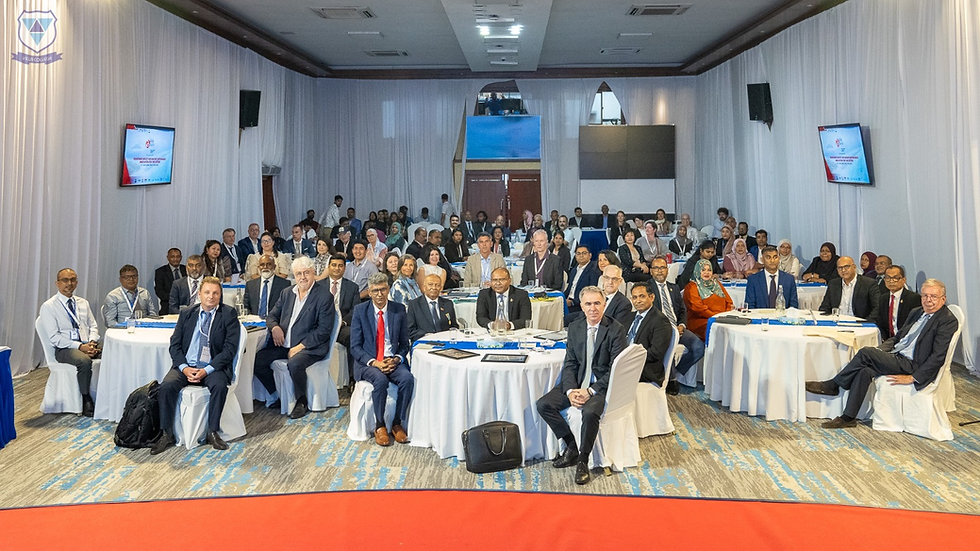
To date, the conference has been hosted by universities in the Philippines, India, Malaysia, France, and the Maldives. In partnership with various universities and research centres, the conference continues to serve as a leading global platform for scholars, industry practitioners, and postgraduate researchers to exchange knowledge, foster collaborations, and discuss emerging issues within the tourism and service industries. The conference commenced with welcoming remarks by Prof. Dr. Barry Winn, Vice Chancellor and President of Taylor’s University, who warmly welcomed distinguished guests, academics, students, and participants. In his address, Prof. Barry emphasised the University’s commitment to academic excellence, innovation, and holistic education, while encouraging participants to pursue knowledge with creativity, purpose, and social responsibility.
The conference was officially officiated by Dr. Abdulla Niyaz, Minister of State for Tourism, Maldives whose presence underscored the importance of sustainable innovation and international collaboration in shaping the future of tourism and hospitality. Throughout the conference, participants engaged in insightful academic discussions, interdisciplinary exchanges, and networking opportunities focused on contemporary industry challenges and future developments. Three panel sessions addressed key emerging trends within the tourism, gastronomy, and hospitality sectors. The Tourism panel explored “Contemporary Challenges of Tourism Mobility Worldwide: Innovations, Sustainability, and New Travel Experiences,” highlighting the evolving dynamics of global travel and the increasing importance of sustainable tourism practices. The Gastronomy panel, “Fusion or Confusion? The Fine Line Between Innovation and Appropriation,” encouraged critical discussions on culinary creativity, authenticity, and cultural representation. Meanwhile, the Hospitality panel examined “Anticipatory Hospitality: AI, Emotion Tech, and Predictive Guest Experience for a Hyper-Personalised Future,” focusing on the transformative role of artificial intelligence and emerging technologies in redefining guest experiences and hospitality operations.

The conference also featured keynote presentations by internationally renowned scholars and experts. Prof. Dr. François Vellas, President of AIUTA and Professor of International Tourism Economics at the University of Toulouse, France shared valuable perspectives on international tourism economics and global tourism development, Prof. Dr. Jean Pierre Poulain, Chair Professor Food Studies, Taylor’s Toulouse University Centre, Malaysia contributed thought-provoking perspectives on gastronomy and food studies, enriching the conference's academic discourse. In addition, Assoc. Prof. Dr. Anahita Malek and Dr. Alexandra Continuescu from Buckinghamshire New University, UK delivered a collaborative keynote focusing on contemporary academic and industry challenges.
The session brought together distinguished leading academics, policymakers, and industry professionals from renowned institutions across Malaysia, France, the United Kingdom, India, the Philippines, La Réunion, and the Maldives participated in the conference. Experts from Taylor’s University, Malaysia, including Prof. Dr. Neethiahnanthan Ari Ragavan; Prof. Dr. Jens Thoemmes; Assoc. Prof. Dr. Kandappan Balasubramanian; Assoc. Prof. Dr. Salini Devi Rajendran; Assoc. Prof. Dr. Elise Line Mognard and Dr. Nagathisen Katahenggam, joined colleagues from Université Toulouse – Jean Jaurès, ISTHIA, France, namely Prof. Dr. Anne Dupuy; Assoc. Prof. Dr. Cyrille Laporte; Assoc. Prof. Dr. Frederic Zancanaro; Assoc. Prof. Dr. Anne-Claire Yemsi-Paillissé; Assoc. Prof. Dr. Paul-Emmanuel Pichon; alongside Dr. Nilufar Safarova, Manchester Metropolitan University, United Kingdom; Assoc. Prof. Dr. Joy Sheelah Baraero-Era, Far Eastern University, Philippines; Prof. Dr. Sajimon Abraham, Mahatma Gandhi University, India; and Prof. Dr. Laurence Tibère, French National Research Institute for Sustainable Development, La Réunion. The engaging discussion provided valuable insights into collaborative research across hospitality, tourism, food studies, and cross-cultural methodological approaches within the Indo-Pacific region.
In recognising academic excellence, the conference presented Best Paper Awards across the Tourism, Hospitality, and Gastronomy tracks. These awards celebrated outstanding scholarly contributions, innovation, and research impact, reflecting the conference’s commitment to promoting high-quality research and international academic collaboration. The conference concluded with closing remarks by Prof. Dr. Neethiahnanthan Ari Ragavan, Executive Dean of the Faculty of Social Sciences and Leisure Management, Taylor’s University, and Advisory Board Member of the Asia Euro Conferences. In his address, he reflected on the significance and success of the conference, emphasising the importance of sustainability, innovation, and global collaboration in shaping the future of the tourism and hospitality industries. Appreciation was also extended to the organisers, researchers, academics, industry professionals, and participants for their valuable contributions and active engagement throughout the conference. The closing remarks encouraged continued knowledge sharing, international partnerships, and collective efforts towards building a more responsible and resilient future for tourism and hospitality worldwide.