top of page

We are proud to highlight the involvement of Mr. Allistair Adam Nelson, a dedicated Lecturer from Master of Clinical Psychology programme, who has been honored with the responsibility of serving as part of the National Paralympic Classifier Team. This esteemed role involves assessing athletes' eligibility to compete in the Paralympic Games under the Intellectual Impairment (II) category. Allistair participated in an athlete classification event organized by the Paralympic Council Malaysia (PCM) and Jabatan Belia dan Sukan Negeri Selangor at Kompleks Belia Dan Sukan Selangor (KOMBES). The event aimed to prepare athletes representing Selangor for the upcoming Para Sukma Sarawak 2024, scheduled from September 22nd to 28th.

ree

The classification process is crucial to ensuring that athletes' impairments are relevant to their sport and that competition remains fair. To qualify for the Intellectual Impairment category, athletes must meet specific criteria, including an IQ score of 75 or below, low adaptive functioning scores, and documented proof of attendance at a special school. As a Clinical Psychologist, Allistair's key responsibilities during the event included conducting Intellectual Quotient (IQ) assessments using the Weschler Intelligence Scale for Children (WISC) or the Weschler Adult Intelligence Scale (WAIS), and evaluating adaptive behavior functioning through the Vineland Adaptive Behavior Scales. These assessments play a vital role in determining the athletes' eligibility to compete.


Allistair initiated the classification process with intake interviews involving the athletes' parents to gain insight into the athletes' current functioning. Following this, he administered the Vineland Assessment, which evaluates three core components - Communication, Socialization, and Daily Living Skills. After completing this evaluation, he proceeded with the IQ assessments, closely observing the athletes' responses and behavior to ensure the accuracy and integrity of the results. In total, 16 athletes from various sports, including swimming, tenpin bowling, and ping pong, were assessed. Allistair's meticulous approach ensures that all athletes compete on equal grounds, upholding the fairness and integrity of the Paralympic Games.


The Semester 1 Bachelor of International Hospitality Management (Hons) students embarked on a groundbreaking journey in their "Accommodation Management" module through an Immersive Virtual Reality (VR) session dedicated to mastering Front Office operations. This cutting-edge approach was designed to elevate their practical skills, focusing on the intricate processes of guest check-ins and resolving complaints within a hyper-realistic simulation. The session not only provided an interactive and engaging learning experience but also meticulously prepared students for real-world scenarios in a controlled and risk-free environment.

The impact of this innovative learning method was profoundly positive. Students were immersed in a meticulously replicated front office setting, where guest interactions were rendered with stunning accuracy. By engaging in a simulation that mirrored reality so closely, students were able to refine their skills in a context that was both authentic and demanding, greatly enhancing their overall learning experience.


The immersive nature of the VR session captivated students, ensuring active participation, an essential component for effective learning. These realistic simulations allowed students to navigate various scenarios they would likely encounter in a real hotel setting, including guest check-ins, handling inquiries, and resolving complaints. This hands-on approach led to better retention of knowledge and skills, as students were not merely passive observers, but actively engaged participants in the learning process. One of the key benefits of this approach was the opportunity for students to make mistakes and learn from them without facing any real-world consequences.


ree

In a traditional training environment, errors might negatively affect actual guests or the hotel's reputation. However, within the VR setting, students had a safe space to experiment, take risks and learn from their missteps. This encouraged a deeper understanding of front office operations, as students could see the immediate outcomes of their actions and adjust their strategies accordingly.


In conclusion, the integration of immersive VR sessions in the "Accommodation Management" module significantly enriched the learning experience related to Hotel Front Office operations. The realistic simulations not only provided a high level of engagement and practical application, but also led to improved skill retention and confidence. By offering a risk-free environment for experimentation, the VR approach empowered students to learn from their mistakes and better prepare for real-world guest service operations, setting a new standard for hospitality education.


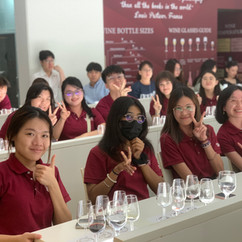
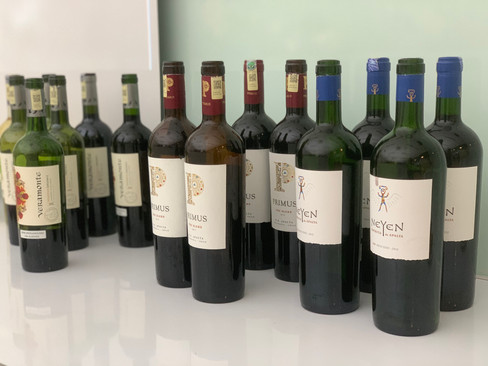
Taylor’s Culinary Institute recently hosted an enlightening Organic Chilean Wine Masterclass featuring Mr. Jong Hyun Kim, Area Manager for Asia-Pacific at Veramonte. This event aimed to increase awareness of Veramonte’s organic Chilean wines. The masterclass was attended by approximately 45 Diploma in Hotel Management students, lecturers from Taylor’s University, and wine aficionados. Mr. Kim provided an insightful session on the nuances of Chilean organic wines, showcasing a selection from Veramonte including Cabernet Sauvignon, Merlot, Sauvignon Blanc, Primus The Blend, and Veramonte Neyen. Participants enjoyed an in-depth exploration of Chilean wine diversity.

The event began with an engaging presentation on Veramonte’s organic vineyards in Casablanca Valley and Colchagua Valley. Mr. Kim explained that the cool climate of Casablanca Valley is ideal for producing crisp white wines, while the warmer Colchagua Valley excels in robust reds. He highlighted Veramonte’s commitment to organic and sustainable practices as essential for maintaining healthy, expressive vineyards that produce wines reflecting their unique terroir. Detailed discussions on soil management practices such as the quality compost, cultivation between rows, incorporation of animals, and conservation of biological corridors, provided participants with a deeper understanding of organic viticulture.

Following this informative overview, the tasting session commenced with the Sauvignon Blanc, followed by Merlot, Cabernet Sauvignon, Primus The Blend, and concluded with the exceptional Neyen. Neyen was a particular highlight, offering a unique experience with a wine produced from some of the oldest Cabernet Sauvignon vines in the world, planted in 1889, and blended with Carmenère grafted in 1936. Produced in a historical winery alongside modern facilities, Neyen stands out for its biodynamic, complex, and age-worthy profile.

ree

The masterclass proved to be a highly enlightening experience, especially given the relatively rare focus on organic wines in Malaysia. We extend our gratitude to all participants for their engagement and to Mr. Kim for his expertise. We eagerly anticipate hosting more educational and enriching events in the future. Stay tuned for further updates from Taylor's Culinary Institute!

bottom of page